As we settle into 2026, personal finance choices reflect a blend of economic pressures, evolving investment tools, and changing consumer behaviours. Recent developments highlight how people are adapting to today’s financial climate.
1. Financial Security Still Matters The Most
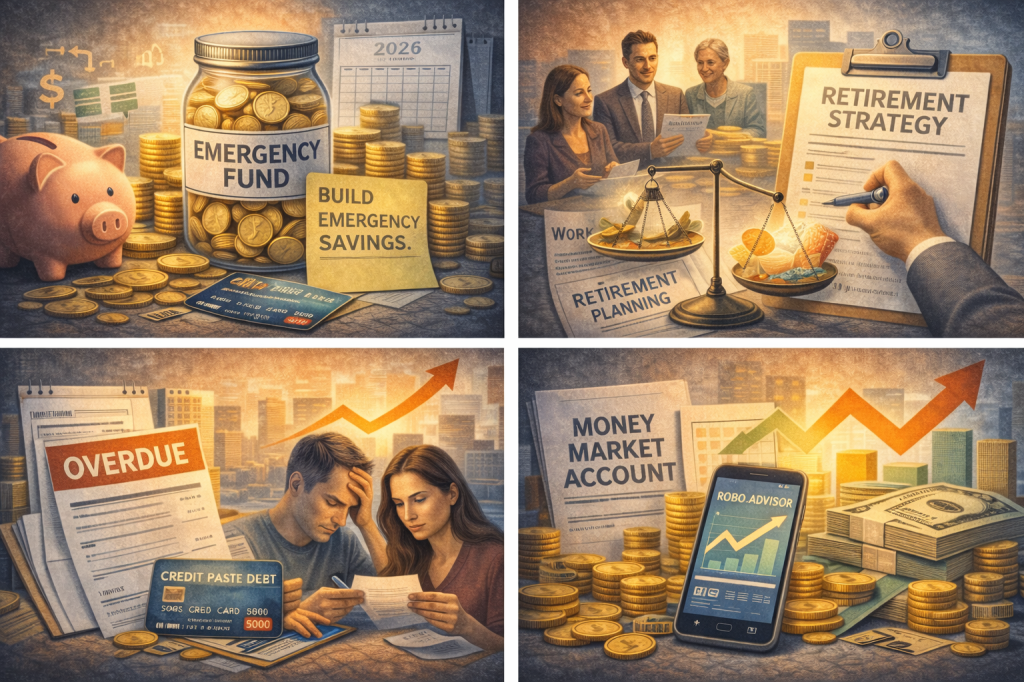
A new survey shows that younger adults are prioritising financial security over health and lifestyle goals. With rising expectations to buy property, invest, travel, and start families, combined with social media pressure, many are tightening budgets and focusing on saving habits. Respondents frequently mentioned budgeting, emergency funds, and debt review as practical steps to regain financial control in 2026. This trend mirrors a broader global shift where economic concerns outweigh discretionary spending, even when inflation rates have eased somewhat.
2. Emergency Savings Are a Top Resolution
Money experts in the U.S. recommend that people build a small emergency fund in just 30 days using simple, actionable steps. Key strategies include setting up automated savings transfers, applying the 50/30/20 budgeting rule, reducing discretionary outlays, and planning for predictable costs. Considering that many Americans still lack emergency savings and a sizable portion cannot cover even modest unexpected expenses, building a safety buffer remains a priority for 2026 financial planning.
3. Retirement Planning Is Shifting
Financial advisors are redefining how they approach retirement advice, adapting to market instability, inflation worries, and evolving social benefits systems. New guidance emphasises flexible retirement paths—like phased retirement or part-time work alongside adjusted withdrawal strategies. Other recommendations include diversifying portfolios, maintaining cash reserves, and considering liquid or tax-efficient assets. This represents a move away from one-size-fits-all retirement planning toward more personalised, resilient strategies.
4. Rising Debt and Cautious Spending
In the UK, recent data shows credit card borrowing jumped at the fastest annual rate in nearly two years, even as inflation cooled. This suggests households are relying on credit to manage everyday costs, particularly after the holidays, while still showing caution in discretionary spending.
5. Opportunities for Savers and Investors
On the positive side, competitive money market account rates are attracting savers, with top offerings providing attractive yields compared to traditional savings accounts. Meanwhile, growth stocks and digital investment platforms like robo-advisors are gaining attention as tools for building long-term wealth.
What This Means for Your Money in 2026
The personal finance landscape in 2026 is defined by security over speculation, practical saving strategies, and strategic investing. Households still face pressures from credit reliance and cost constraints, but tools for emergency preparedness, diversified investing, and adaptable retirement planning offer pathways to stronger financial health. Staying informed and proactive remains essential in navigating the year ahead.
 VahishtaInvest