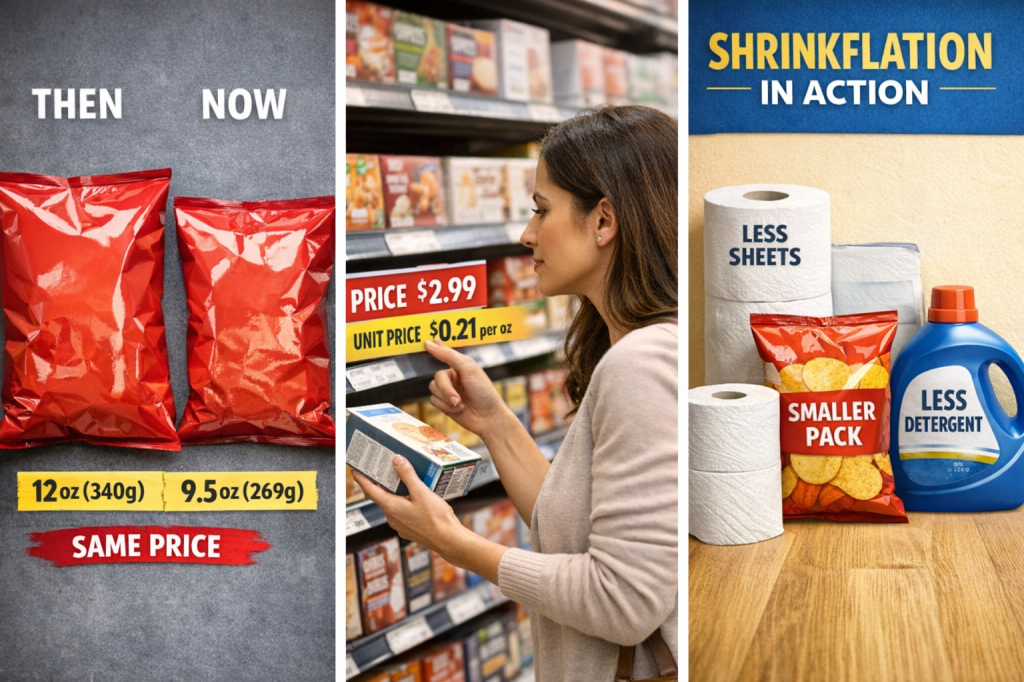
Shrinkflation is a pricing strategy in which companies reduce the size, quantity, or quality of a product while keeping its price the same. Unlike traditional inflation, where prices rise visibly, shrinkflation is more subtle. Consumers often pay the same amount but receive less, making it harder to notice and measure its impact on household budgets.
Shrinkflation commonly appears in everyday items such as packaged food, toiletries, and household goods. For example, a cereal box may shrink from 500 grams to 450 grams, or a chocolate bar may become thinner while maintaining the same retail price. In some cases, the packaging remains unchanged, which can further obscure the reduction. This practice has been widely documented across global markets, particularly during periods of rising production, transportation, and labor costs.
From a budgeting perspective, shrinkflation reduces purchasing power. Consumers may believe they are spending the same as before, but over time they need to buy products more frequently to maintain the same level of consumption. For households on fixed or tight budgets, this can lead to higher monthly grocery and household expenses without any obvious price increases.
Shrinkflation also complicates price comparison. Many shoppers focus on the shelf price rather than the unit price (price per gram, liter, or item). When package sizes change, comparing products becomes more difficult unless consumers carefully check unit pricing labels. This can result in unintentional overspending, particularly for staple items purchased regularly.
Manufacturers often use shrinkflation as an alternative to direct price hikes because consumers tend to react more strongly to visible price increases. From a business standpoint, this approach can help maintain sales volumes. However, from a consumer standpoint, it reduces transparency and makes cost-of-living increases harder to track.
How Shrinkflation Affects Your Budget
- You spend the same amount but receive less value
- Replacement purchases happen more often
- Monthly expenses gradually increase without obvious price changes
Suggested Relatable Images (for Article Use):
- A side-by-side comparison of the same grocery product labeled “Then” and “Now” with reduced weight
- A shopper examining unit price labels on a supermarket shelf
- Everyday household items (snacks, toilet paper, detergent) shown with shrinking quantities
Understanding shrinkflation is essential for effective budgeting. By paying attention to unit prices, package sizes, and consumption habits, consumers can better assess real costs and make more informed purchasing decisions in an environment where price changes are not always immediately visible.
 VahishtaInvest